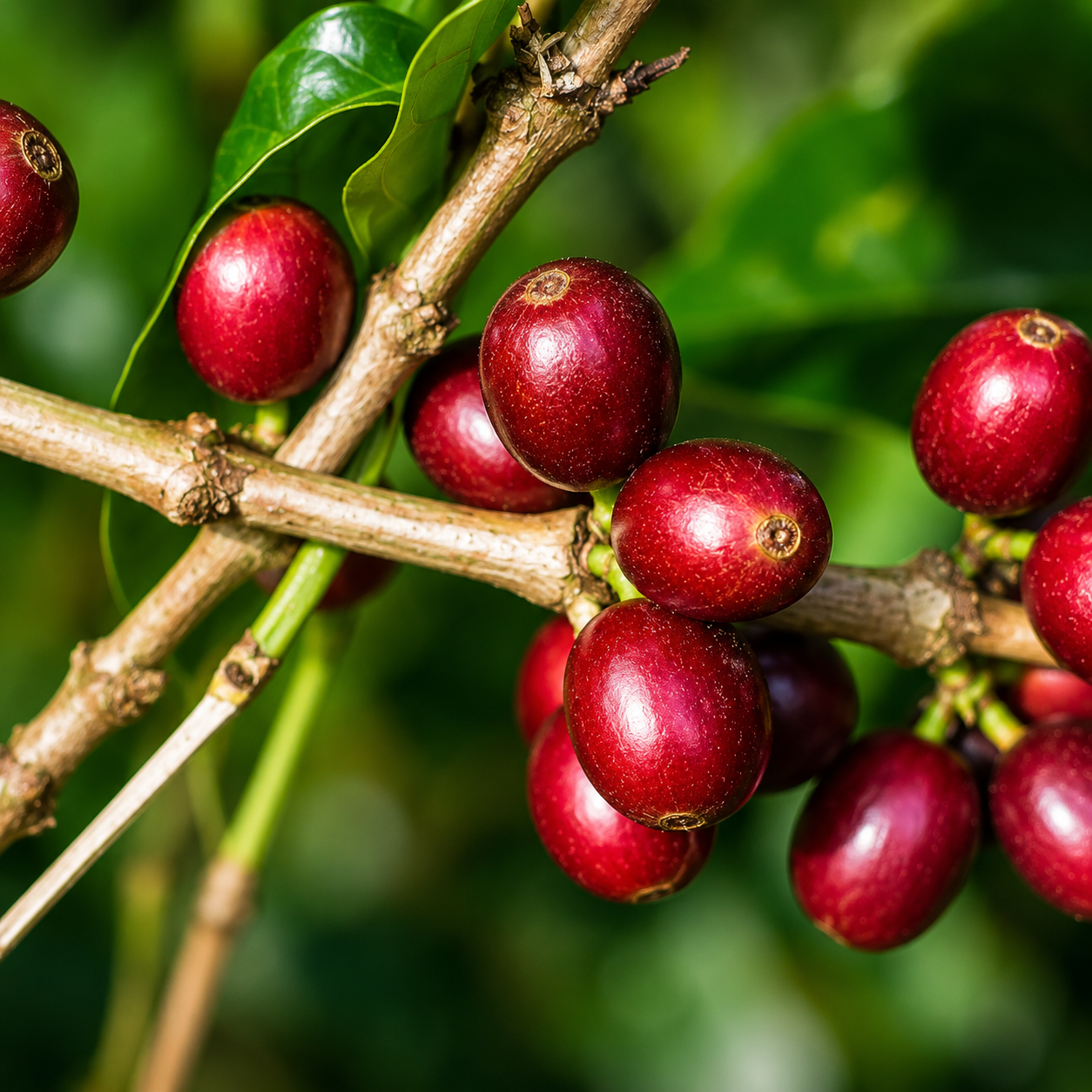
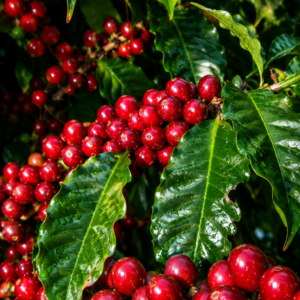
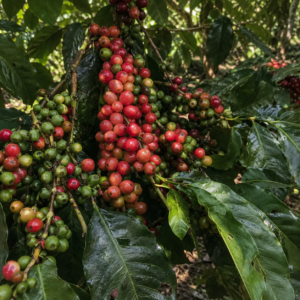
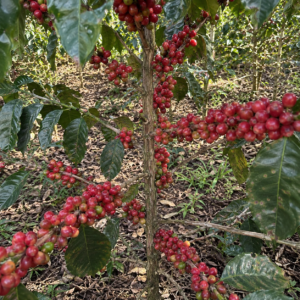
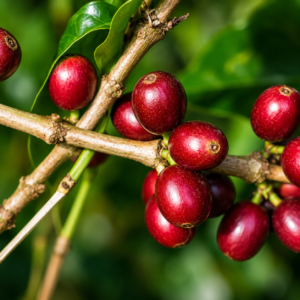
The Tropical Robusta Selection (TRS) Coffee (Coffea robusta) represents a group of carefully selected Robusta genotypes developed to maximize adaptability, productivity, and cup quality under humid tropical environments. Rather than referring to a single officially registered clone, TRS generally denotes elite Robusta selections chosen from superior mother trees exhibiting desirable agronomic characteristics such as vigorous growth, abundant fruiting, uniform bean development, and resilience under challenging tropical conditions. These selections have gained popularity among farmers, nurseries, and specialty Robusta enthusiasts seeking planting materials capable of delivering both commercial yields and improved beverage quality.
Historically, the concept of Tropical Robusta Selection emerged from the increasing demand for improved Robusta planting materials that could outperform traditional seed populations. Farmers and breeders across Southeast Asia and other tropical coffee producing regions began identifying outstanding trees within established plantations, selecting individuals with superior vigor, productivity, and sensory potential. These elite selections were propagated and distributed under the designation “TRS” to distinguish them from unimproved Robusta populations. Today, Tropical Robusta Selection coffees continue to attract attention due to their ability to combine the traditional strengths of Robusta with increasingly refined cup characteristics. Commercial seed suppliers describe TRS as a premium Robusta selection suitable for tropical cultivation systems.
In modern coffee industries, TRS Coffee occupies an important role within commercial Robusta production, specialty Robusta initiatives, espresso blend manufacturing, and green bean export markets. The beans contain valuable antioxidants, chlorogenic acids, aromatic compounds, and naturally elevated caffeine levels that contribute to their distinctive sensory profile. Due to their adaptability, stable performance, and market flexibility, Tropical Robusta Selections continue to gain recognition among growers aiming to improve both profitability and bean quality.
Flavor Profile (TRS Coffee Sensory Profile)
- Taste: Rich notes of dark chocolate, caramel, roasted nuts, cocoa, molasses, mild spice, and subtle dried fruit sweetness with balanced bitterness.
- Texture: Medium to full body with a creamy mouthfeel and a smooth, lingering finish.
- Aroma: Fragrance featuring cocoa, toasted almonds, brown sugar, light tobacco nuances, and delicate earthy accents.
Multipurpose Benefits (Beyond Coffee Production)
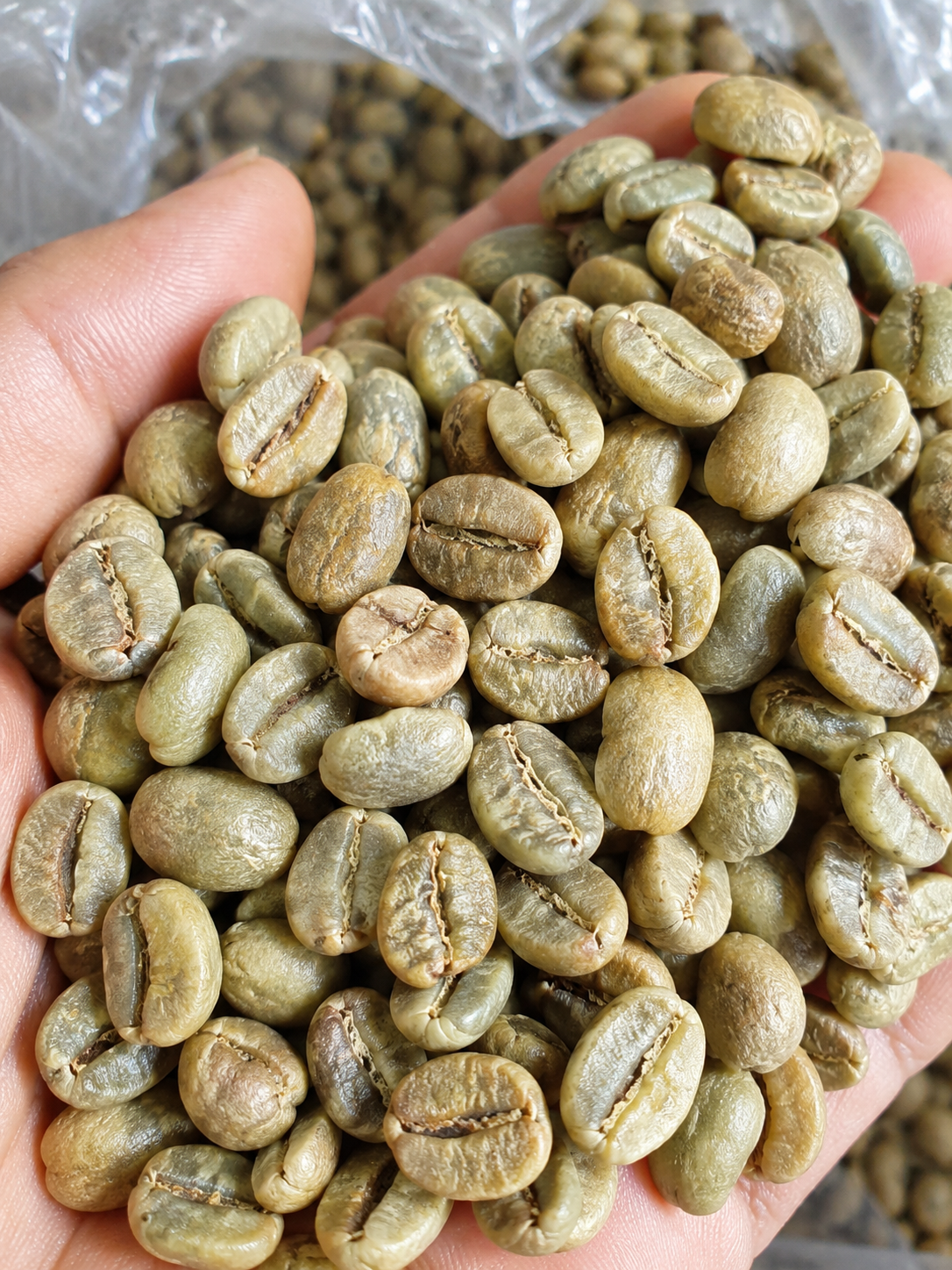
- Bean Benefits: Rich in antioxidants, chlorogenic acids, caffeine, and naturally occurring aromatic compounds valued in commercial and specialty Robusta sectors.
- Commercial Benefits: Highly suitable for espresso blends, specialty Robusta offerings, instant coffee manufacturing, traditional brewing methods, and green bean export markets.
- Processing Flexibility: Performs exceptionally well under natural, washed, honey, wet hulled, and specialty fermentation methods.
- By Product Utilization: Coffee cherries, cascara beverages, coffee husks, organic compost, biofertilizers, and biomass applications contribute additional economic opportunities.
Optimizing the agronomic performance of TRS Coffee requires fertile soils, balanced nutrition, and effective plantation management. The selections develop efficient root systems, productive branch structures, and vigorous canopies capable of supporting abundant flowering and fruit development. Proper cultivation practices significantly improve productivity, bean quality, and plantation longevity.
Furthermore, understanding that TRS represents elite tropical selections rather than a single clone enables growers to maximize adaptability while preserving the strengths of locally suitable Robusta genetics.
Yield Potential
Provides moderate to high Robusta coffee yields with excellent commercial value for industrial processing, specialty Robusta production, and export oriented markets.
Planting Density
■ Standard Spacing: 2.5 meters × 2.5 meters or 3 meters × 2.5 meters depending on terrain and management systems.
■ Trees per Hectare: Approximately 1,300 to 1,600 trees per hectare under commercial production systems.
Seed Requirement
■ Per Hectare: Approximately 1,400 to 1,700 seedlings are recommended per hectare for optimal plantation establishment.
Growth Metrics
■ Time to First Harvest: Approximately 2.5 to 3 years after planting under optimal growing conditions.
■ Plant Height & Canopy Diameter: Typically reaches 3 to 5 meters in height with a vigorous canopy structure depending on selection and pruning practices.
■ Productive Lifespan: Remains commercially productive for approximately 20 to 30 years under professional plantation management.
Yield Breakdown
■ Early Production (Years 2–3): Produces initial commercial coffee cherry harvests during early establishment stages.
■ Peak Production (Years 4–15): Produces approximately 2 to 4 tons of green coffee beans per hectare annually under favorable conditions and good agricultural practices.
■ Annual Harvest Season: Generally produces one major harvest season annually, with timing influenced by regional rainfall patterns.
Pest & Disease Resistance
■ Natural Shielding: Exhibits excellent adaptation to humid tropical lowland and mid elevation environments.
■ Disease Resilience: Demonstrates moderate to good tolerance against common Robusta production stresses, with resistance levels varying among individual selections.
■ Pro Tip for Growers: Selecting high quality mother trees, maintaining balanced nutrition, and implementing routine pruning significantly enhance yield stability and plantation performance.
Optimizing the agronomic performance of TRS Coffee requires fertile soils, balanced nutrition, and effective plantation management. The selections develop efficient root systems, productive branch structures, and vigorous canopies capable of supporting abundant flowering and fruit development. Proper cultivation practices significantly improve productivity, bean quality, and plantation longevity.
Furthermore, understanding that TRS represents elite tropical selections rather than a single clone enables growers to maximize adaptability while preserving the strengths of locally suitable Robusta genetics.
Yield Potential
Provides moderate to high Robusta coffee yields with excellent commercial value for industrial processing, specialty Robusta production, and export oriented markets.
Planting Density
■ Standard Spacing: 2.5 meters × 2.5 meters or 3 meters × 2.5 meters depending on terrain and management systems.
■ Trees per Hectare: Approximately 1,300 to 1,600 trees per hectare under commercial production systems.
Seed Requirement
■ Per Hectare: Approximately 1,400 to 1,700 seedlings are recommended per hectare for optimal plantation establishment.
Growth Metrics
■ Time to First Harvest: Approximately 2.5 to 3 years after planting under optimal growing conditions.
■ Plant Height & Canopy Diameter: Typically reaches 3 to 5 meters in height with a vigorous canopy structure depending on selection and pruning practices.
■ Productive Lifespan: Remains commercially productive for approximately 20 to 30 years under professional plantation management.
Yield Breakdown
■ Early Production (Years 2–3): Produces initial commercial coffee cherry harvests during early establishment stages.
■ Peak Production (Years 4–15): Produces approximately 2 to 4 tons of green coffee beans per hectare annually under favorable conditions and good agricultural practices.
■ Annual Harvest Season: Generally produces one major harvest season annually, with timing influenced by regional rainfall patterns.
Pest & Disease Resistance
■ Natural Shielding: Exhibits excellent adaptation to humid tropical lowland and mid elevation environments.
■ Disease Resilience: Demonstrates moderate to good tolerance against common Robusta production stresses, with resistance levels varying among individual selections.
■ Pro Tip for Growers: Selecting high quality mother trees, maintaining balanced nutrition, and implementing routine pruning significantly enhance yield stability and plantation performance.

Reviews
There are no reviews yet.