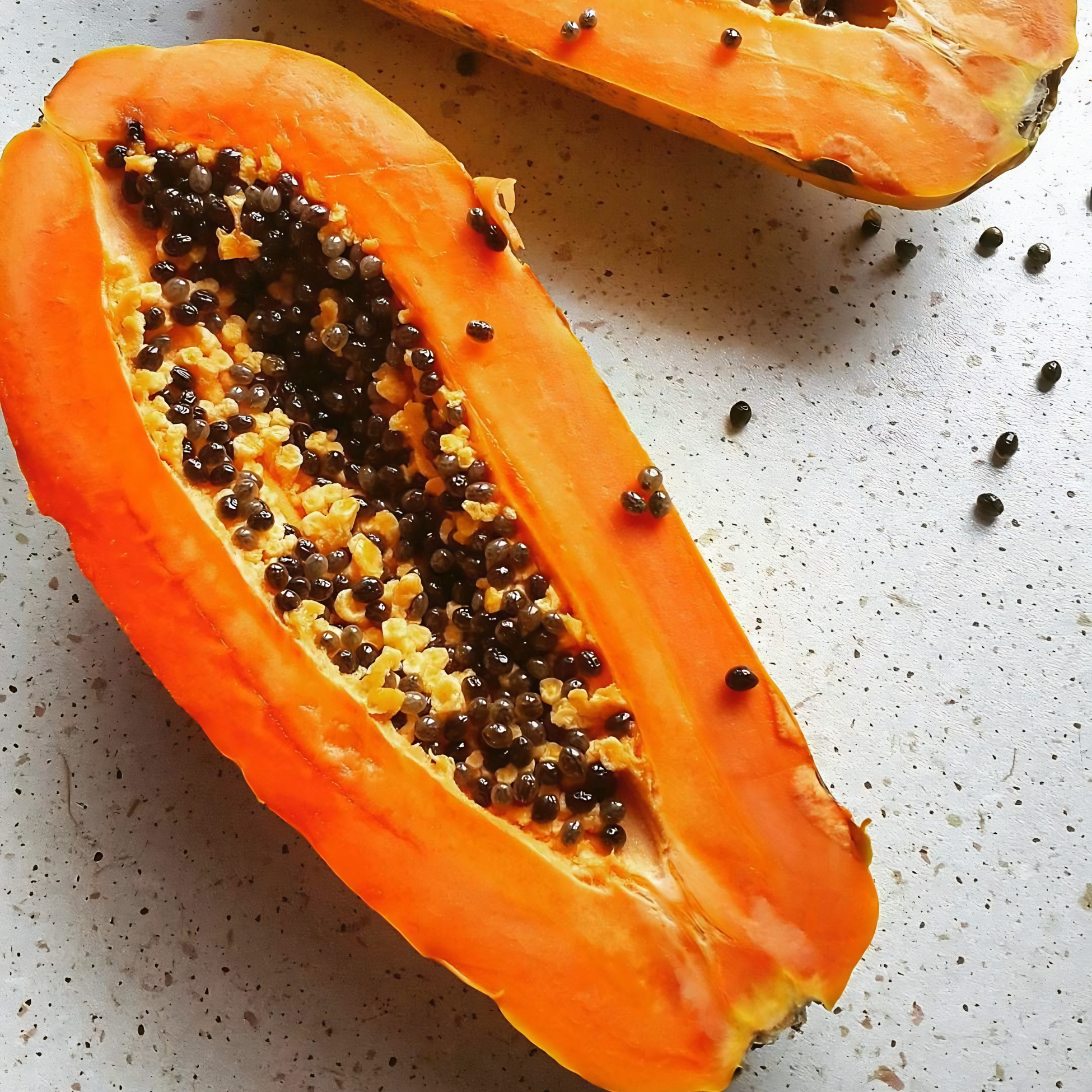
The Red Arjuna Papaya (Carica papaya) is a highly productive tropical papaya cultivar recognized for its vibrant red orange flesh coloration, exceptional sweetness, rapid fruiting cycle, and superior commercial adaptability. Botanically belonging to the Caricaceae family, this cultivar exhibits vigorous vegetative growth, efficient flowering behavior, and stable fruit setting performance under warm tropical environments. The cultivar is especially valued for its uniform fruit morphology, attractive market appearance, and elevated sugar accumulation, making it highly suitable for both fresh fruit distribution and premium tropical export markets.
Historically, Red Arjuna papaya emerged through intensive tropical selection programs focused on improving fruit coloration, sweetness, and plantation productivity. Over time, the variety gained popularity among commercial growers due to its fast maturity, continuous fruiting capability, and strong adaptability across humid lowland regions. The cultivar rapidly became favored within Southeast Asian tropical fruit industries because of its consistent fruit size, smooth texture, and strong consumer demand for red fleshed papaya varieties.
In modern agro industrial systems, Red Arjuna papaya plays an important role in fresh fruit supply chains, juice processing, smoothie industries, and functional food markets. The fruit contains high concentrations of Vitamin C, beta carotene, lycopene, natural digestive enzymes, and antioxidant compounds that contribute to its nutritional and commercial value. Due to its attractive flesh pigmentation and sweet tropical flavor profile, Red Arjuna papaya remains highly competitive within global premium papaya markets.
Flavor Profile (Red Arjuna Papaya Sensory Profile)
- Taste: Intensely sweet and refreshing with rich tropical fruit nuances, balanced melon-like sweetness, and mild floral undertones.
- Texture: Smooth, buttery, and succulent flesh with low fiber content and excellent mouthfeel.
- Aroma: Sweet tropical fragrance with ripe melon, honey, and subtle floral aromatic characteristics.
Multipurpose Benefits (Beyond the Fruit)
- Fruit Benefits: Rich in Vitamin C, Vitamin A, lycopene, potassium, folate, and natural antioxidants that support immune health, skin regeneration, and digestive wellness.
- Medicinal Benefits of Papaya Leaves: Traditionally utilized in herbal preparations containing papain enzymes and bioactive alkaloids associated with immune support and antioxidant activity.
- Therapeutic Properties of Papaya Seeds: Seeds contain natural antimicrobial compounds and digestive-supporting phytochemicals widely studied in traditional medicine applications.
- By Product Utilization: Papaya latex and enzymatic extracts are commercially utilized in food tenderizers, cosmetics, pharmaceuticals, and digestive enzyme industries.
Optimizing the agronomic performance of Red Arjuna papaya requires precise nutrient management, balanced irrigation systems, and effective canopy sanitation practices. The cultivar possesses a highly vigorous growth structure with rapid stem elongation and continuous reproductive development, enabling early commercial fruit production and stable annual harvest cycles. Proper spacing and fertilization strategies are essential to maximize fruit size, sweetness, and plantation productivity.
Furthermore, understanding the cultivar’s accelerated vegetative to reproductive transition allows growers to establish highly efficient commercial plantations with rapid return on investment. The following structural and productivity parameters define the optimal operational framework for Red Arjuna papaya cultivation.
Yield Potential
Provides exceptionally high commercial productivity with continuous fruiting capability and premium grade red fleshed fruits highly demanded in fresh tropical fruit markets.
Planting Density
- Standard Spacing: 2.5 meters x 2.5 meters or 3 meters x 2.5 meters depending on soil fertility and management intensity.
- Plants per Hectare: Approximately 1,300 to 1,600 plants per hectare under intensive tropical cultivation systems.
Seed Requirement
- Per Hectare: Approximately 2,000 to 2,500 premium seeds are recommended per hectare to ensure adequate female and hermaphrodite plant selection.
Growth Metrics
- Time to First Harvest: 8 to 12 months after transplanting under optimal tropical growing conditions.
- Plant Height & Canopy Diameter: Typically reaches 2 to 4 meters in height with compact canopy architecture suitable for high density farming.
- Productive Lifespan: Remains commercially productive for approximately 3 to 5 years before yield decline becomes economically significant.
Yield Breakdown
- Early Production (Months 8–12): Produces initial commercial fruits weighing approximately 1 to 2.5 kg each depending on nutrient management and climatic conditions.
- Peak Production (Years 2–3): Yields approximately 40 to 80+ kg of marketable fruits per plant annually under professional management systems.
- Annual Harvest Season: Capable of continuous year-round production in stable tropical climates with proper irrigation and fertilization.
Pest & Disease Resistance
- Natural Shielding: Shows moderate tolerance against common tropical environmental stress conditions and fluctuating rainfall patterns.
- Antifungal Resilience: Performs best in well drained soils with good airflow management to reduce fungal disease pressure.
- Pro Tip for Growers: Consistent calcium and potassium supplementation significantly improves fruit firmness, sweetness, and shelf life stability.
Successful cultivation of Red Arjuna papaya depends heavily on warm climatic conditions, fertile soils, and stable moisture availability. Young seedlings require careful management during early root establishment stages because papaya plants are highly sensitive to waterlogging and root zone stress. Since the cultivar demonstrates rapid vegetative growth and heavy fruit loads, balanced nutrient supply and continuous organic matter availability are critical for maintaining long-term productivity.
By integrating efficient irrigation systems, orchard sanitation, and biological soil improvement strategies, growers can maximize fruit quality, sweetness, and plantation efficiency. The following environmental requirements and propagation protocols outline the optimal framework for establishing high-performing Red Arjuna papaya plantations.
Climate Adaptation
- Temperature: Thrives optimally between 22°C to 34°C under warm tropical and subtropical environments.
- Altitude: Best suited for low to medium elevations ranging from sea level up to approximately 1,000 meters above sea level.
- Sunlight: Requires full sunlight exposure for maximum photosynthetic efficiency and optimal fruit sugar development.
Soil Requirements
- Nursery/Seedling Stage: Prefers highly porous, fertile, and moisture balanced media composed of coco peat, compost, sand, and topsoil with pH 5.8–6.8.
- Transplanting Stage: Performs best in deep, fertile, well drained sandy loam soils rich in organic matter and microbial activity.
Seed Germination & Propagation Protocol
- Pre-Treatment: Soak seeds in clean lukewarm water for 12–24 hours to soften the seed coating and accelerate embryo activation.
- Sowing: Plant seeds approximately 1–1.5 cm deep in moist nursery trays under partial shade conditions.
- Germination Timeline: Seeds generally germinate within 10 to 21 days under stable warm temperatures.
- Transplanting Protocol: Seedlings are ready for field transfer when reaching 20–30 cm in height with healthy root development and several true leaves.
Advanced Microclimate Engineering for Papaya Production
- Soil Drainage Optimization: Raised beds and proper drainage channels are highly recommended to prevent root rot and stem base diseases.
- Irrigation Stability: Consistent drip irrigation management prevents fruit cracking and stabilizes sugar accumulation.
- Fruit Quality Engineering: Maintaining balanced potassium and boron availability significantly enhances fruit coloration, sweetness, and firmness.
Exogenous Phytohormone Applications (Natural Growth Triggers)
- Auxin & Gibberellin Inoculation: Organic seaweed extracts and onion based root stimulants can accelerate root establishment and early vegetative vigor.
- Cytokinin Boost: Diluted coconut water applications may improve seedling development and cellular expansion during nursery stages.
- Stress Reduction: Organic mulching and beneficial microbial inoculants significantly improve soil resilience, moisture retention, and long term plantation stability.

Reviews
There are no reviews yet.