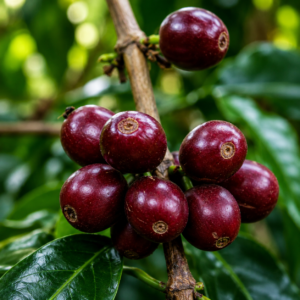
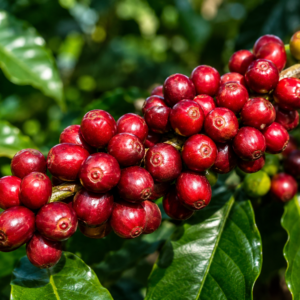
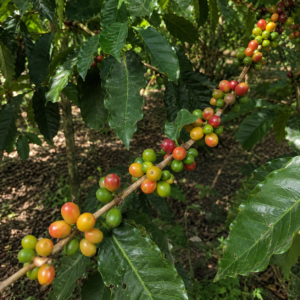
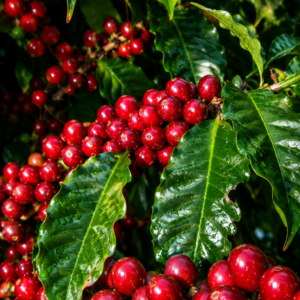
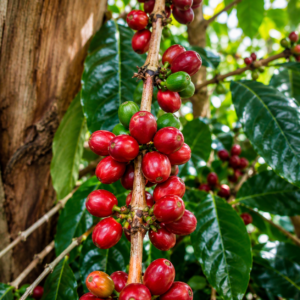
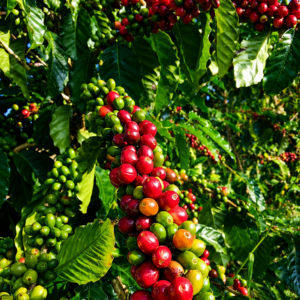
The Pache Komum Coffee (Coffea arabica) is a rare and highly distinctive Arabica coffee selection originating from Guatemala, valued for its compact growth habit, excellent adaptation to highland environments, and refined cup quality. Closely associated with the Pache genetic group, Pache Komum exhibits vigorous vegetative development, dense branching architecture, and reliable productivity under traditional shade grown coffee systems. Its relatively manageable stature makes it particularly suitable for intensive cultivation practices while maintaining the premium quality characteristics sought after in specialty coffee markets.
Historically, Pache Komum emerged as a naturally selected mutation within the Typica lineage in Guatemala, where local farmers identified plants displaying compact growth characteristics without sacrificing cup excellence. The Pache group subsequently gained recognition among coffee producers for its ability to combine desirable agronomic traits with traditional Arabica flavor profiles. Over time, Pache Komum became appreciated within specialty coffee circles due to its balanced sensory attributes, adaptability to mountainous production zones, and suitability for quality oriented coffee production systems.
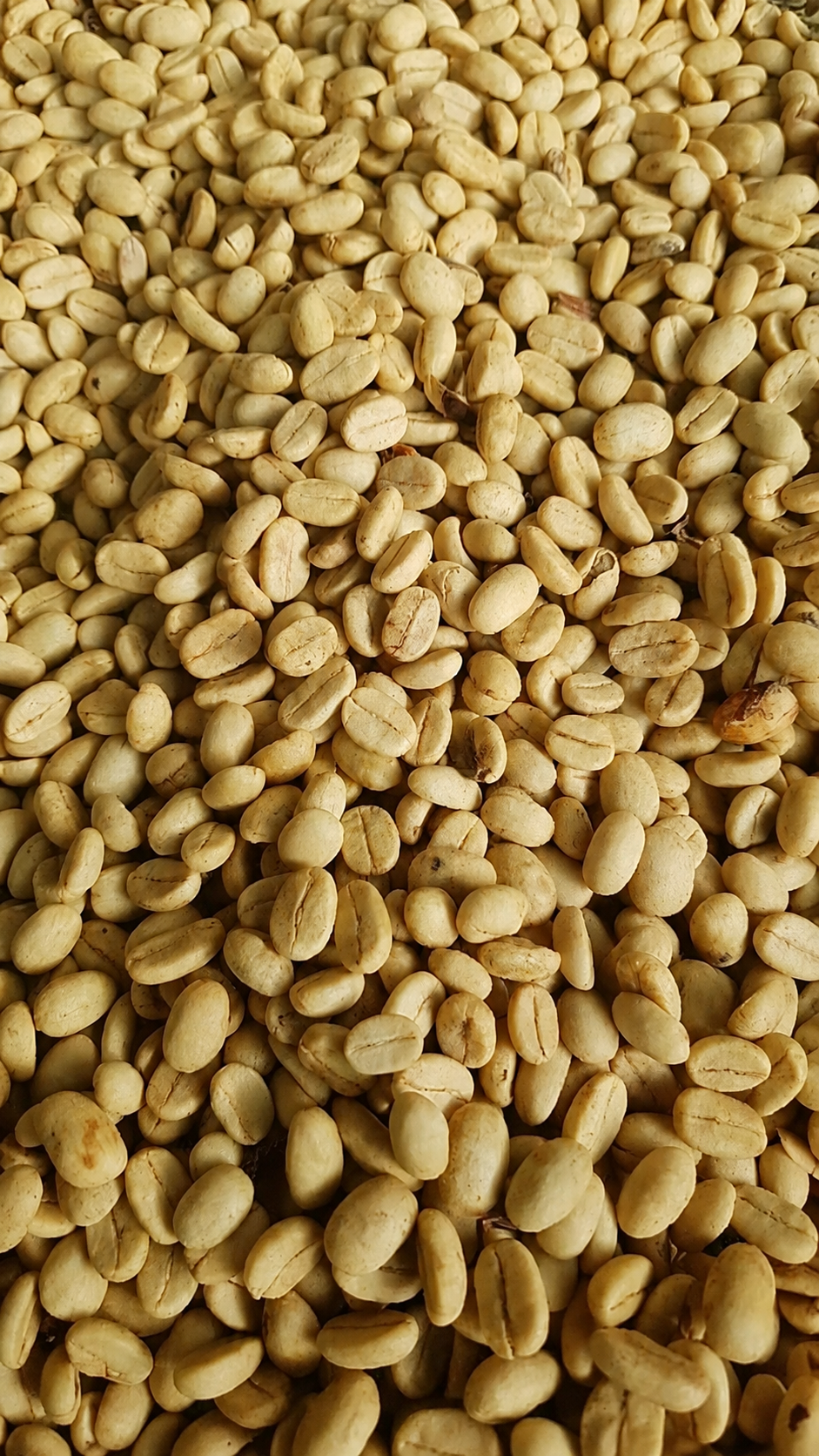
In contemporary coffee industries, Pache Komum Coffee serves both specialty and premium commercial coffee markets. The beans contain valuable antioxidants, chlorogenic acids, aromatic compounds, and flavor precursors that contribute to attractive cup characteristics. Due to its dependable productivity, manageable plant structure, and appealing flavor profile, Pache Komum remains an attractive cultivar for specialty coffee producers, artisanal roasters, and export oriented coffee enterprises seeking traditional Arabica excellence.
Flavor Profile (Pache Komum Coffee Sensory Profile)
- Taste: Balanced sweetness with notes of caramel, milk chocolate, brown sugar, citrus, red fruits, and subtle floral accents.
· Texture: Medium body with smooth mouthfeel and clean, pleasant finish.
· Aroma: Delicate fragrance featuring cocoa, caramel, roasted nuts, mild floral notes, and hints of ripe fruit.
Multipurpose Benefits (Beyond Coffee Production)
- Bean Benefits: Rich in antioxidants, chlorogenic acids, caffeine, and naturally occurring aromatic compounds valued within specialty coffee industries.
· Commercial Benefits: Highly suitable for specialty roasting, premium blends, single origin offerings, and green bean export markets.
· Processing Flexibility: Performs well under washed, honey, natural, and specialty fermentation processing methods.
· By Product Utilization: Coffee cherries, cascara beverages, coffee husks, organic compost, biofertilizers, and value added coffee products contribute additional economic opportunities.
Optimizing the agronomic performance of Pache Komum Coffee requires fertile soils, balanced nutrition, and proper highland plantation management. The cultivar develops strong root systems, compact canopy structures, and productive branch architecture capable of supporting abundant flowering and cherry production. Proper cultivation practices significantly improve bean quality, productivity, and long term plantation profitability.
Furthermore, understanding the variety’s compact growth habit and quality potential allows growers to maximize production efficiency and land utilization. The following structural and productivity parameters define the ideal operational framework for establishing highly productive Pache Komum Coffee plantations.
Yield Potential
Provides highly profitable Arabica coffee yields with strong demand in specialty coffee, commercial roasting, premium blends, and export oriented coffee markets.
Planting Density
- Standard Spacing: 2 meters × 2 meters or 2 meters × 2.5 meters depending on terrain and cultivation systems.
· Trees per Hectare: Approximately 2,000 to 2,500 trees per hectare under intensive coffee production systems.
Seed Requirement
- Per Hectare: Approximately 2,200 to 2,600 seedlings are recommended per hectare for optimal plantation establishment.
Growth Metrics
- Time to First Harvest: 2.5 to 3.5 years after planting under optimal growing conditions.
· Plant Height & Canopy Diameter: Typically reaches 1.8 to 3 meters in height with a compact and manageable canopy structure.
· Productive Lifespan: Remains commercially productive for approximately 20 to 25 years under professional plantation management.
Yield Breakdown
- Early Production (Years 2.5–3.5): Produces initial commercial coffee cherry harvests during early establishment stages.
· Peak Production (Years 4–15): Yields approximately 1.5 to 3.5 tons of green coffee beans per hectare annually under professional cultivation systems.
· Annual Harvest Season: Commonly produces one major harvest season with possible secondary pickings depending on local climatic patterns.
Pest & Disease Resistance
- Natural Shielding: Exhibits good adaptability to traditional shade grown coffee environments and mountainous cultivation systems.
· Disease Resilience: Demonstrates moderate tolerance to common coffee diseases but requires routine monitoring and integrated crop management for optimum performance.
· Pro Tip for Growers: Strategic canopy pruning and balanced nutrition significantly improve airflow, fruit uniformity, bean density, and long term productivity.
Successful cultivation of Pache Komum Coffee depends heavily on suitable elevations, fertile soils, and sustainable plantation management practices. Young trees establish steadily and develop productive branch systems capable of supporting abundant flowering and uniform cherry maturation. Because the variety is valued for both cup quality and manageable growth habit, proper nutrition and canopy management become essential for maintaining consistent productivity and bean excellence.
By integrating biological soil enhancement, efficient fertilization programs, structured pruning systems, and sustainable farming practices, growers can significantly improve productivity, cup quality, and plantation resilience. The following environmental requirements and propagation protocols outline the optimal framework for commercial Pache Komum Coffee cultivation.
Climate Adaptation
- Temperature: Thrives optimally between 17°C to 25°C under tropical highland climates.
· Altitude: Best suited for elevations ranging from 1,200 to 1,800 meters above sea level.
· Sunlight: Performs best under filtered sunlight or managed shade systems that support healthy growth and gradual cherry maturation.
Soil Requirements
- Nursery/Seedling Stage: Prefers loose, fertile growing media with pH 5.0–6.5 consisting of compost, coco peat, sand, and fertile topsoil.
· Transplanting Stage: Performs best in deep, fertile, well drained volcanic or loamy soils rich in organic matter and biological activity.
Seed Germination & Propagation Protocol
- Pre Treatment: Fresh seeds should be soaked in clean water for 24 hours before sowing to improve germination consistency.
- Sowing: Plant seeds approximately 1–2 cm deep in moist nursery media under partially shaded conditions.
- Germination Timeline: Seeds generally germinate within 30 to 60 days depending on seed quality and environmental stability.
- Transplanting Protocol: Seedlings are ready for field establishment once they develop healthy root systems and several pairs of vigorous leaves.
Advanced Microclimate Engineering for Premium Pache Komum Coffee Production
- Canopy Optimization: Strategic pruning improves airflow, sunlight distribution, and fruit uniformity while maintaining manageable tree architecture.
· Irrigation Stability: Consistent soil moisture supports healthy flowering, fruit set, and uniform cherry development.
· Bean Quality Engineering: Balanced potassium, calcium, magnesium, and organic nutrition significantly enhance bean density, sweetness, and specialty grade quality.
Exogenous Phytohormone Applications (Natural Growth Triggers)
- Auxin & Root Development Enhancement: Organic seaweed extracts and natural root stimulants may accelerate root establishment and nutrient absorption efficiency.
· Cytokinin Boost: Diluted coconut water applications can support vegetative vigor, branching development, and flowering potential.
· Stress Reduction: Organic mulching and beneficial microbial inoculants significantly improve soil health, moisture retention, and long term plantation sustainability.


Reviews
There are no reviews yet.