
 Inquiry via Email
 Inquiry via WhatsApp
Green Sugar Apple: Sweet Tropical Annona with High Yield and Soft Creamy Flesh
Origin Historical and Botanical Heritage
Green Sugar Apple (Annona squamosa) is a traditional tropical fruit originating from Central America and the Caribbean, where it was cultivated by early civilizations before spreading to Asia and Africa through trade. Over time, selective propagation produced various regional types, with the green form becoming one of the most widely adapted and valued for its consistent sweetness, soft texture, and reliable fruiting. It also serves as a genetic base for many modern Annona hybrids.
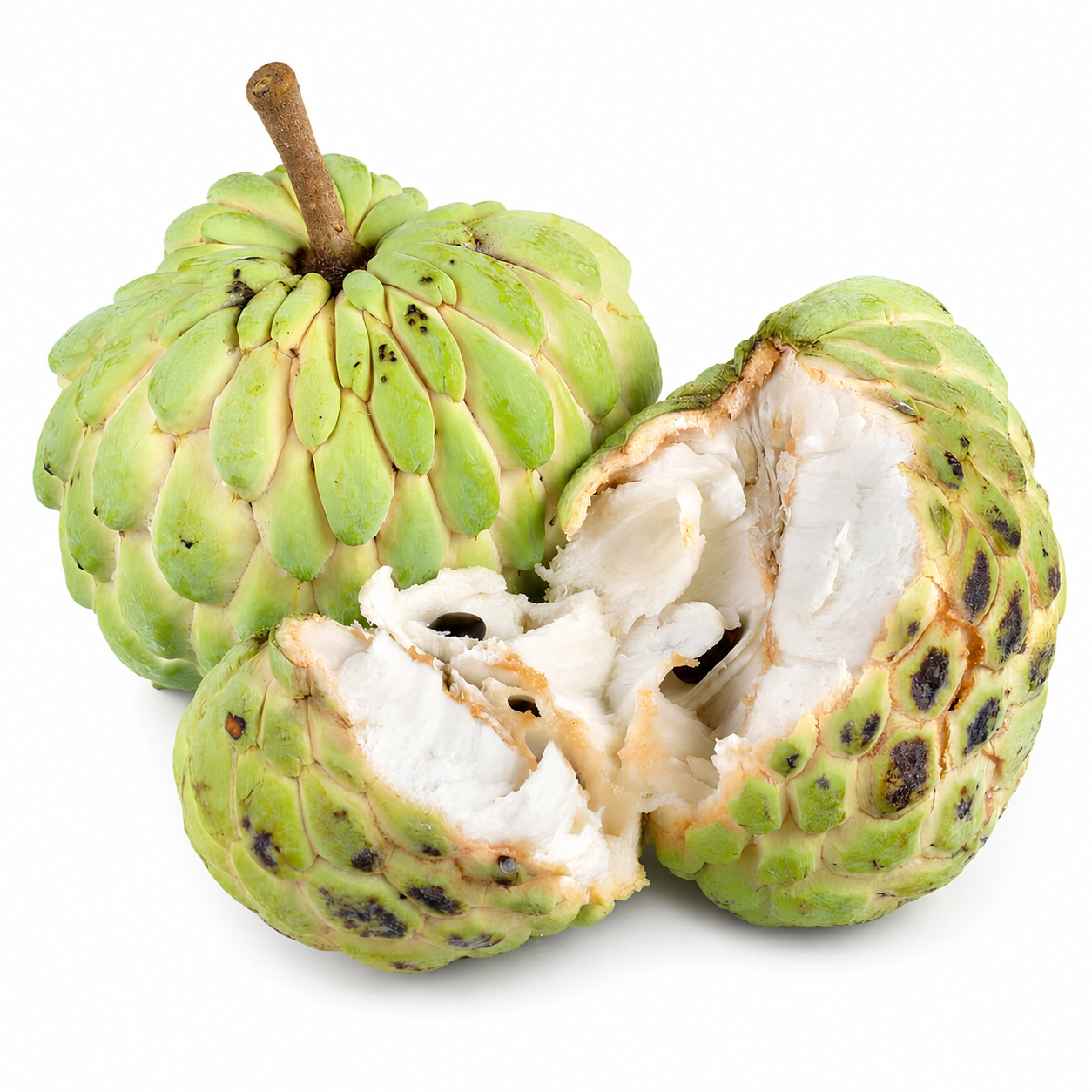
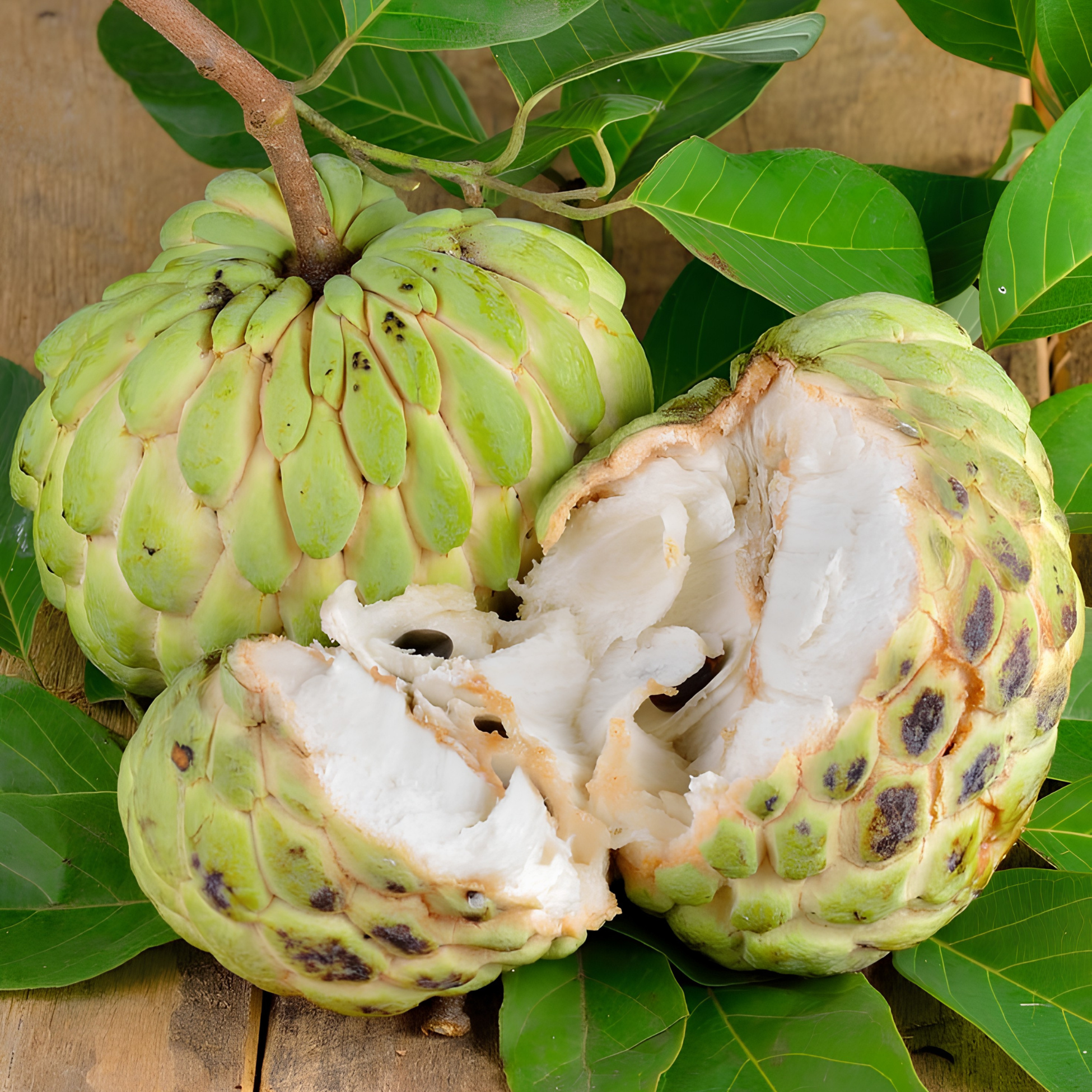
Botanically, it is a small, semi deciduous tree with moderate growth and an open canopy, suitable for small orchards. The fruits are medium sized (200–400 grams), round to heart shaped, with distinctive segmented green skin. Inside, the creamy white flesh is soft, aromatic, and rich, containing multiple glossy black seeds and a high pulp content. Due to its delicate texture, the fruit requires careful handling when fully ripe.
Flavor Profile (Annona Sensory Profile)
Green Sugar Apple offers a rich, dessert like flavor with very high sweetness and low acidity. It has a strong tropical aroma, with taste notes resembling sweet custard complemented by hints of vanilla and banana. The texture is soft, creamy, and melts in the mouth, finishing smooth and intensely sweet. This indulgent profile makes it highly desirable for fresh consumption and premium niche markets.
Yield Potential and Planting Density
Green Sugar Apple is a productive variety under suitable management conditions.
- Yield Potential: 10–20 tons per hectare annually
- Initial Fruiting: 2–3 years from seed
- Full Production: 4–6 years
Planting Density:
- Spacing: 4 × 4 m to 5 × 5 m
- Trees per hectare: approximately 400–625 trees
Seed Requirement:
- Approximately 800–1,200 seeds per hectare (including selection and germination rate considerations)
Climate Adaptation and Growing Requirements
Green Sugar Apple thrives in tropical and warm subtropical climates.
- Optimal temperature: 22–32°C
- Moderate tolerance to dry conditions
- Sensitive to frost and prolonged cold exposure
- Performs best under full sunlight
Soil Requirements:
- Well drained sandy loam soils
- Ideal pH: 5.5–7.0
- Tolerates relatively poor soils but responds well to fertility improvement
Seed Germination and Propagation Method (Optimized Protocol)
- Seed Extraction and Cleaning
- Extract seeds from fully ripe fruits
- Wash thoroughly to remove pulp residue
- Seed Scarification (Recommended)
- Lightly scratch or nick the seed coat to enhance water absorption
- Soaking Treatment
- Soak seeds in warm water (25–30°C) for 24 hours
- Pre-Germination (Moist Tissue Method)
- Place seeds in moist tissue or paper towel
- Store in sealed container at 25–30°C
Germination Time: 15–25 days
- Nursery Planting
- Transfer sprouted seeds into polybags with well-drained media
- Seedling Care
- Provide partial shade during early growth
- Maintain consistent moisture
- Transplant when seedlings reach 20–30 cm
Genetic and Propagation Insight
Sugar apple propagated from seed may show variation in fruit size, sweetness, and seed count. However, green type selections are relatively stable and widely used for both direct cultivation and breeding programs.
Plantanesia Quality Assurance and Services
At Plantanesia, all planting materials are produced under strict quality standards to ensure reliability and performance.
- Certified genetic authenticity for every seed batch
- Supported by laboratory testing results
- Non-GMO certification available upon request
- Seeds sourced from selected, high performing parent plants
- Processed to ensure maximum viability, vigor, and germination success
Plantanesia provides premium export quality seeds tailored for growers, nurseries, and agribusiness professionals seeking consistent, high quality planting materials for sustainable production.
Reviews
There are no reviews yet.