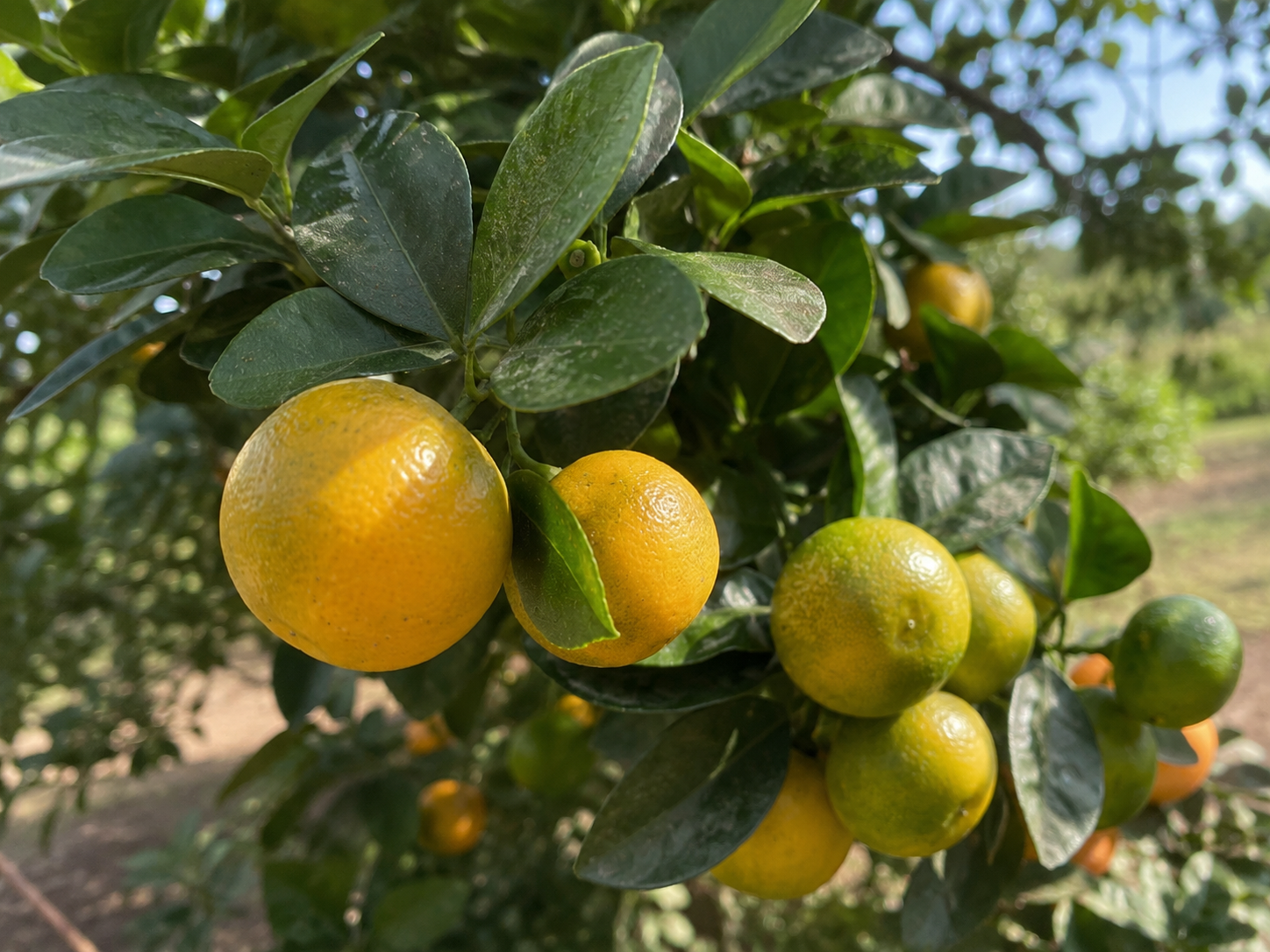
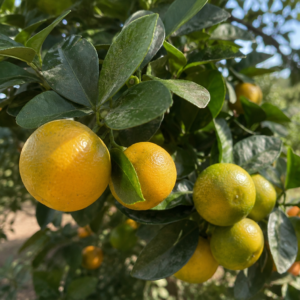
The Calamansi Orange (Citrus microcarpa) is a highly valued tropical citrus fruit renowned for its aromatic flavor, exceptional versatility, and remarkable productivity. Native to Southeast Asia and widely cultivated in the Philippines, Malaysia, Indonesia, and neighboring countries, Calamansi produces small round fruits that transition from deep green to bright orange when fully ripe. The fruits combine the refreshing acidity of a lime with subtle sweet orange undertones, creating a distinctive flavor profile highly appreciated in culinary and beverage applications. The trees are compact, evergreen, and highly ornamental, making them suitable for home gardens, container cultivation, and commercial orchards.
The botanical heritage of Calamansi traces back to ancient natural hybridization events involving members of the mandarin and kumquat citrus groups. Over centuries, farmers throughout Southeast Asia selected superior trees based on fruit quality, productivity, aroma, and environmental adaptability. As a result, Calamansi became one of the region’s most important citrus crops and an integral ingredient in traditional cuisine, beverages, and food preservation practices. Today, it remains a cornerstone of tropical citrus production and continues to gain popularity in international specialty fruit markets.
In modern horticulture, Calamansi is cultivated for fresh consumption, juice production, flavoring applications, culinary uses, ornamental planting, and commercial processing. The fruits are rich in vitamin C, antioxidants, flavonoids, essential oils, and beneficial phytochemicals. Their unique balance of acidity, aroma, and sweetness makes Calamansi one of the most versatile citrus fruits in the world.
Flavor Profile (Calamansi Orange Sensory Profile)
■ Taste: Bright citrus acidity balanced by subtle mandarin sweetness with refreshing tropical citrus notes.
■ Texture: Juicy flesh with tender segments and abundant juice content.
■ Aroma: Intensely fragrant with notes of lime zest, sweet orange, mandarin peel, and tropical floral undertones.
Multipurpose Benefits
■ Fresh Consumption: Excellent for fresh squeezing, condiments, and table use.
■ Beverage Production: Ideal for juices, lemonades, concentrates, cocktails, teas, and refreshing beverages.
■ Culinary Uses: Widely used in marinades, sauces, desserts, dressings, seafood dishes, and traditional Southeast Asian cuisine.
■ Nutritional Value: Rich in vitamin C, flavonoids, antioxidants, and natural citrus essential oils.
Successful cultivation of Calamansi Orange requires fertile soils, balanced nutrition, and proper orchard management. The trees develop dense canopies, productive branch systems, and abundant flowering habits capable of producing large fruit crops throughout the year. Their compact growth habit makes them particularly suitable for high density planting systems and home gardens.
Furthermore, maintaining healthy orchard conditions supports continuous flowering cycles and long term fruit production.
Yield Potential
Provides high yields of premium quality citrus fruits suitable for fresh markets, processing industries, and export oriented production.
Planting Density
■ Standard Spacing: 3 meters × 3 meters to 5 meters × 5 meters depending on production objectives.
■ Trees per Hectare: Approximately 400 to 1,100 trees per hectare.
Seed Requirement
■ Per Hectare: Approximately 450 to 1,200 seedlings are recommended per hectare depending on orchard design.
Growth Metrics
■ Fruiting Time: Approximately 2 to 4 years after planting from seed under favorable growing conditions.
■ Plant Height: Typically reaches 2 to 5 meters in height under commercial orchard management.
■ Productive Lifespan: Remains commercially productive for approximately 20 to 35 years with proper care.
Yield Breakdown
■ Early Production (Years 2–4): Initial fruiting begins during orchard establishment.
■ Peak Production (Years 5–20): Produces approximately 15 to 35 tons of fresh fruit per hectare annually under favorable conditions and proper management.
■ Harvest Season: Capable of producing multiple harvest cycles annually in tropical climates.
Pest & Disease Resistance
■ Natural Adaptation: Exhibits excellent adaptation to tropical and subtropical climates.
■ Disease Resilience: Moderate resistance to common citrus pests and diseases when managed under proper orchard sanitation programs.
■ Pro Tip for Growers: Regular harvesting encourages continuous flowering and sustained fruit production throughout the year.
Calamansi Orange performs best under warm climates, fertile soils, and consistent orchard management. Young trees establish rapidly and develop productive canopies capable of supporting continuous flowering and fruiting cycles. Proper irrigation, fertilization, and pruning practices significantly enhance fruit size, juice content, and overall productivity.
By integrating soil improvement strategies, balanced nutrient programs, and effective pest management measures, growers can maximize both fruit quality and orchard profitability.
Climate Adaptation
■ Temperature: Thrives optimally between 22°C and 32°C.
■ Altitude: Best suited for elevations ranging from 0 to 1,000 meters above sea level.
■ Sunlight: Requires full sun exposure for optimal flowering, fruit development, and productivity.
Soil Requirements
■ Nursery Stage: Prefers loose, fertile growing media with pH 5.5–6.8 containing compost, coco peat, sand, and topsoil.
■ Field Planting Stage: Performs best in deep, well drained loamy soils rich in organic matter and biological activity.
Seed Germination & Propagation Protocol
- Pre Treatment: Soak seeds in clean water for 12–24 hours before sowing.
- Sowing: Plant seeds approximately 1–2 cm deep in moist nursery media.
- Germination Timeline: Seeds generally germinate within 2–5 weeks depending on seed freshness and environmental conditions.
- Transplanting Protocol: Seedlings are ready for field establishment once they develop healthy roots and several pairs of vigorous leaves.
Advanced Orchard Management for Premium Fruit Production
■ Canopy Optimization: Strategic pruning improves airflow, sunlight penetration, and fruit uniformity.
■ Irrigation Stability: Consistent moisture availability supports continuous flowering and fruit enlargement.
■ Fruit Quality Engineering: Balanced potassium, calcium, magnesium, and organic nutrition enhance juice content, aroma, and fruit quality.
Exogenous Phytohormone Applications (Natural Growth Triggers)
■ Auxin Enhancement: Natural rooting stimulants and seaweed extracts promote vigorous root development.
■ Cytokinin Boost: Coconut water applications may support vegetative growth and branching.
■ Stress Reduction: Organic mulches and beneficial microbial inoculants improve soil health, moisture retention, and environmental resilience.

Reviews
There are no reviews yet.