
Dayak Onion (Eleutherine palmifolia): Medicinal Red Bulb with High Adaptability and Functional Value
Origin Historical and Botanical Heritage
Dayak Onion (Eleutherine palmifolia) is a traditional medicinal plant originating from the Amazon basin and later widely adapted in Southeast Asia. It has long been used by indigenous communities, particularly the Dayak people, as a natural remedy. Over time, its spread through ethnobotanical exchange and continued selection improved bulb size, color intensity, and bioactive compound content, including flavonoids and phenolics, making it an important plant in herbal and nutraceutical applications.
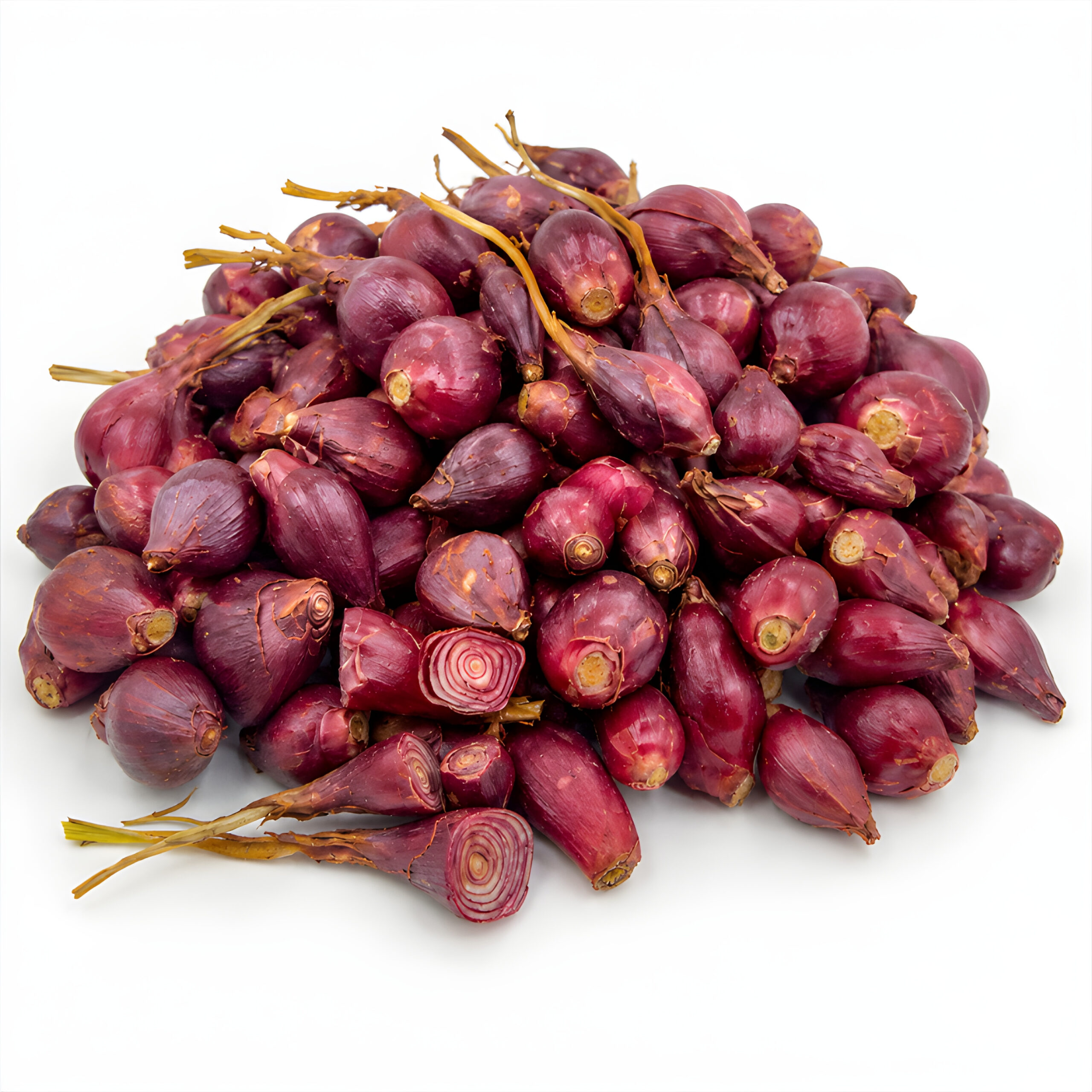
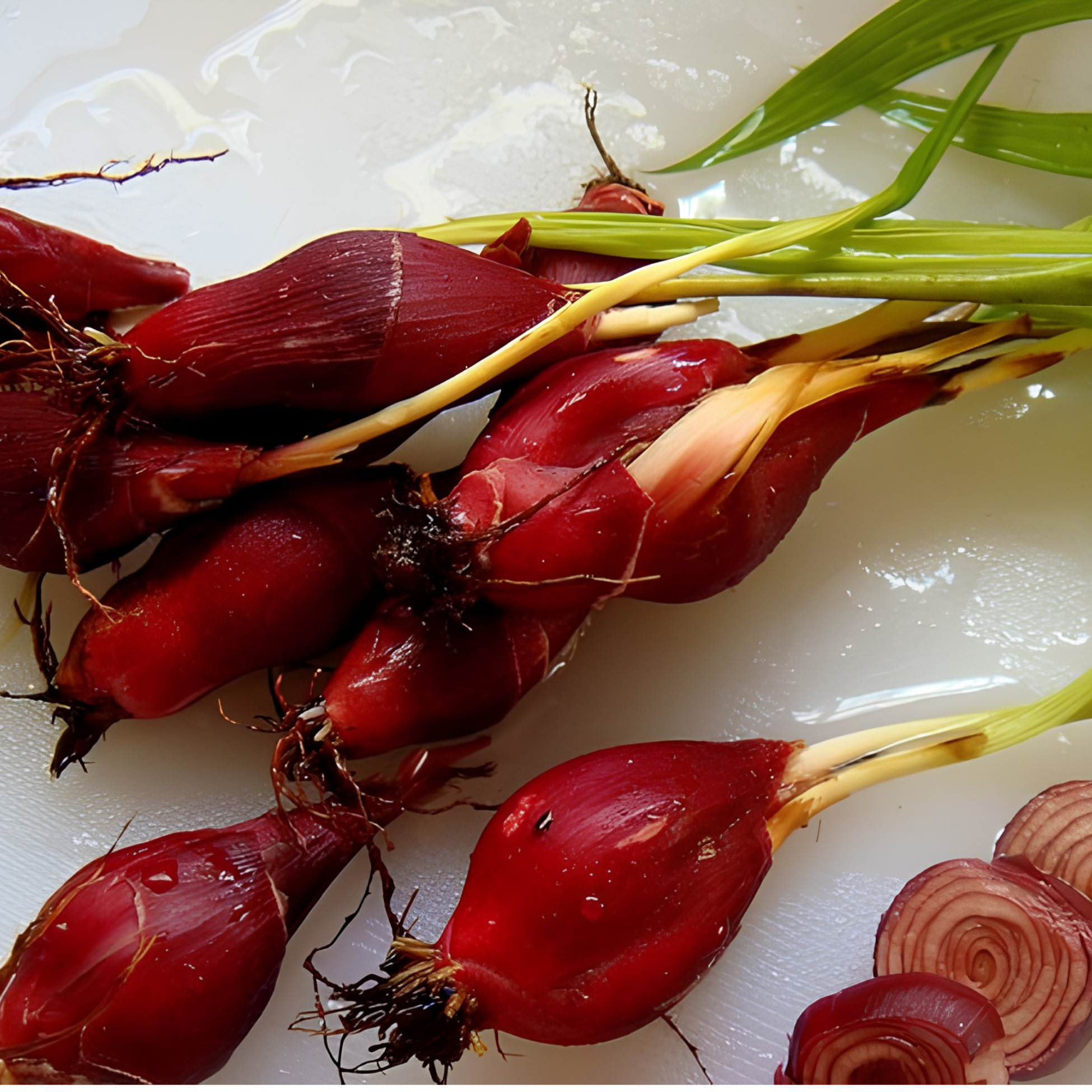
Botanically, it is a perennial herb from the Iridaceae family, distinct from common onions, growing from underground bulbs with narrow, grass like leaves. The plant reaches 30–60 cm in height and produces oval to elongated bulbs with deep red to maroon coloration. Its firm, layered flesh and strong pigmentation indicate high antioxidant content, and the bulbs are the primary harvested part, used in fresh, dried, or processed forms.
Flavor and Functional Profile (Herbal Sensory Profile)
Dayak Onion has a distinctive taste profile characterized by a slightly bitter flavor with mild sweetness, complemented by a herbal and earthy aroma. Its texture is firm and somewhat fibrous when raw, becoming softer after processing. Beyond its taste, it is highly valued for its rich antioxidant and bioactive compound content, making it widely used in herbal extracts, teas, powders, and capsule formulations.
Yield Potential and Planting Density
Dayak Onion is a relatively productive bulb crop under proper cultivation.
- Yield Potential: 8–15 tons of fresh bulbs per hectare annually
- Harvest Age: 6–8 months after planting
Planting Density:
- Spacing: 20 × 20 cm to 25 × 25 cm
- Plants per hectare: approximately 160,000–250,000 plants
Seed/Bulb Requirement:
- Approximately 800–1,200 kg of bulbs or seeds per hectare (depending on propagation method)
Climate Adaptation and Growing Requirements
Dayak Onion is well adapted to tropical climates.
- Optimal temperature: 23–32°C
- Requires moderate rainfall or irrigation
- Tolerates partial shade but performs best under full sunlight
Soil Requirements:
- Well drained, loose soils rich in organic matter
- Ideal pH: 5.5–6.5
- Sensitive to waterlogging
Seed Germination and Propagation Method (Optimized Protocol)
(Dayak Onion is commonly propagated by bulbs, but seed propagation is also possible.)
- Seed Selection and Cleaning
- Use mature, viable seeds
- Clean and dry seeds before use
- Soaking Treatment
- Soak seeds in warm water (25–30°C) for 12–24 hours
- Pre-Germination (Moist Tissue Method)
- Place seeds in moist tissue or cocopeat
- Maintain temperature at 25–30°C
Germination Time: 10–20 days
- Nursery Sowing
- Sow seeds in seed trays or polybags with loose media
- Transplanting
- Transfer seedlings when they reach 10–15 cm height
Alternative (Bulb Propagation – Recommended)
- Plant bulbs directly for faster and more uniform growth
Genetic and Propagation Insight
Seed propagation may result in variability in bulb size and phytochemical content. Vegetative propagation using bulbs is preferred for maintaining uniformity. However, seed grown plants are useful for breeding and expanding genetic diversity.
Plantanesia Quality Assurance and Services
At Plantanesia, all planting materials are handled with strict quality control to ensure performance and consistency.
- Certified genetic authenticity for every batch
- Supported by laboratory testing results
- Non-GMO certification available upon request
- Sourced from selected, high quality parent plants
- Processed to ensure maximum viability, vigor, and uniform growth
Plantanesia provides premium export quality planting materials designed for growers, herbal producers, and agribusiness professionals seeking reliable and high value crops for sustainable production.
Reviews
There are no reviews yet.